According to the lunar calendar, the past month is called Aashadam. It marks the end of the Uttarayanam, and after this, the period of Dakshinayanam and the festival season in India start. This means a lot of colour, food, and family gatherings.
I do not intend to discuss religious ceremonies or spiritual significance in this post. So, why did I bring up the topic of Aashadam? Well, this month, it is customary for women to apply mehndi/henna to their hands and feet. We not only use it in our homes, but we also have to share it with as many relatives as possible.
As a child, it was an exciting time for me to decorate my hands with intricate mehndi/henna patterns and watch my hands bloom in a vibrant shade of red. While children and youngsters were interested in mehndi patterns and attaining the best shade on our hands, my mother always insisted on its medicinal benefits.
For those who are unaware of the rich history and fascination surrounding henna or mehndi in India, here is a little background information:
The botanical name of the mehndi/henna tree is Lawsonia inermis. Henna is famous not just in India but across the Middle East. While the world knows Arabic mehndi styles, I must inform the readers that the mehndi tradition was prevalent in India long before this.
In India, mehndi was used for both medicinal and cosmetic purposes. Ancient times saw mehndi as an herb, but nowadays, it is remembered merely as a cosmetic or traditional decoration. It is used chiefly during weddings to decorate the hands and feet of women and men.
Generally, we can buy dried mehndi powder from the stores or use ready-made mehndi cones. But my mother refused to use store-bought mehndi cones and made the preparation herself. As she used it for its medicinal benefits, she did not trust the ready-made cones or the dried mehndi powder.
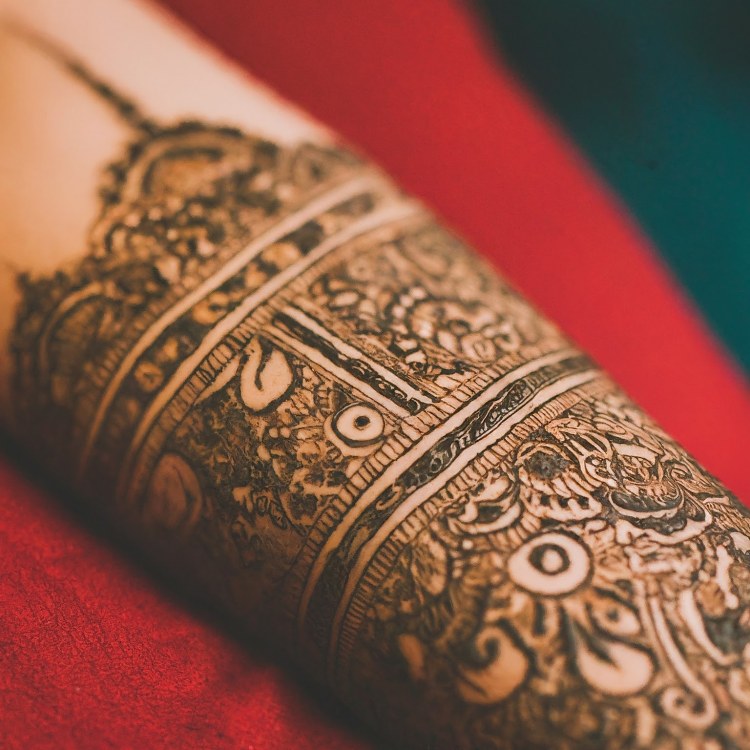
Mehndi leaves should be picked when they are fresh. After thoroughly cleaning them, my mother made a smooth paste with water. Depending on the requirement, she added different other ingredients at a later time.
When applied topically, simple mehndi paste can cure and heal different cuticle-related infections and ingrown nails. When used in the palms of our hands or soles of our feet, the mehndi paste acts as a coolant which absorbs all the excess heat in our body.
During summers, my sisters and I would apply simple mehndi patterns on our palms and wait for them to dry. The best part was the instant cooling sensation that spread into our hands with a touch of this fresh paste. We would dab sugar water on the mehndi patterns to keep the paste from peeling off prematurely. Even after the paste was peeled off, we would avoid touching water to retain the dye effect for as long as possible.
While we enjoyed this, my mother would eat a small teaspoon of this mehndi paste mixed with cumin seeds. She said this helps with the UTI problem and its prevention in women.
In India, we also apply mehndi to our hair as a hair pack. When mixed with curd and other herbs, it acts as a conditioner and a hair dye. It is a viral hair treatment among the older generation. We all grew up with that one aunt or uncle with red/orange hair.
Despite all these benefits that mehndi offers, the Mehndi tree is not a popular choice for household trees. Because it is a thorny tree, mehndi is considered inauspicious for a home. Some people also believe that a mehndi tree houses evil spirits; hence, it should not be grown close to homes.
This month reminded me of all these old customs and home remedies slowly getting lost in this modern world. Nowadays, we only see mehndi during weddings, and no one uses it for their hair. They prefer cosmetic treatments in beauty parlours over these home treatments.


 Random Musings
Leave a comment