All children have an inbuilt sense of curiosity and wonder at everything around them. As a baby, everything in our body is wondrous, from a burp, a fart, and a hiccup to our fingers and toes. A toddler can be mesmerised by the sight of a checkered floor, a soap bubble, and even his own reflection in the mirror.
I remember a particular incident where my nephew spent 15 minutes in front of the mirror trying to understand the process of chewing chips. He would carefully place a chip on his tongue, bite once, and see the chip crumble to pieces and turn into mush. As gross as the sight may be, I clearly remember his shocked expression when he saw a crisp chip become a mushy goop in his mouth.
One can say that this is what any two-year-old would do, as it is a part of the learning process. Discovering hot and cold sensations, good and bad smells, delicious and yucky tastes, fluffy and prickly things, etc., is all a result of a child’s curiosity. They strengthen not only their sense of wonder and hunger to learn, but also their sense of danger and wariness.
As a child, I remember one summer when I discovered that a mirror can reflect the sunlight, and this reflection also carries the heat from the sunlight. My sister had shown me a trick to chase a spider on the roof without moving from my bed. She was just trying to keep me occupied and away from trouble.
She succeeded in her endeavour as I was busy for a long time. As I chased the spider with the light reflection, I thought that the spider preferred the dark and hated light, which was the reason for its escape. Later on, I saw the spider drop dead onto the floor. When I asked my sister, she explained that the spider was burned from the heat. I felt bad for the spider, but learned a new concept.
There was another time when my cousins decided to make a tough and long-lasting string to fly kites and snap other kites. One of them came up with a plan to use aloe vera pulp to make the string stiff and sturdy; another suggested using rice paste.
Our elders patiently watched us destroy a pot of jade plant (we mistook jade plant for aloe vera plant) and waste a pot of cooked rice, but drew the line when we tried to add glass shards for added sharpness. You see, we wanted a tough but sharp string that could last long and snap other kites, but we forgot that we had to hold the same sharp string without cutting our hands and fingers.
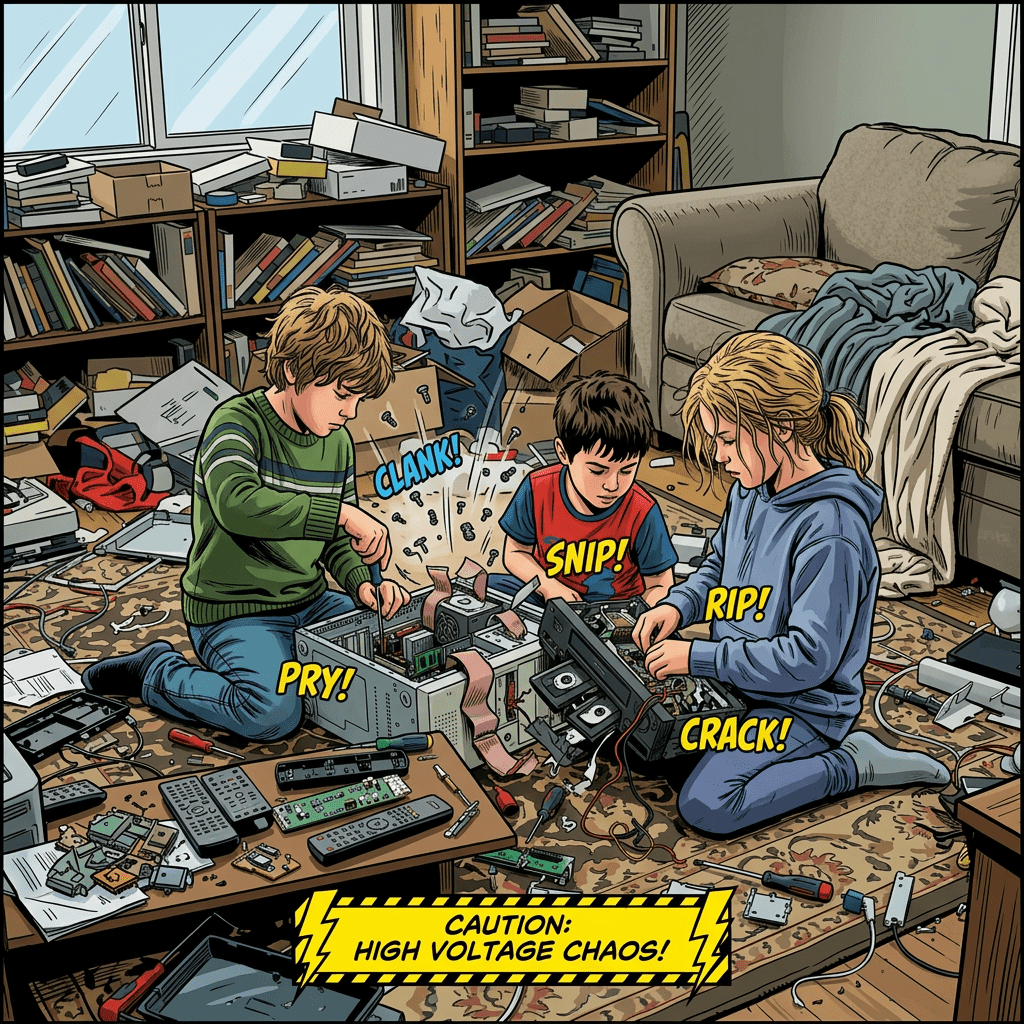
Many of us have such similar stories where we tried to figure out if the light in our fridge stays on even after we close the door, or dismantled mechanical pencils to understand how the lead comes out, or emptied soap powder and liquid soap bottles trying to make soap bubbles that last longer, etc.
While most of us from the 1990s and older recollect these memories very fondly, the younger generation looks down on them as childish behaviour. They cannot understand our need to personally build stuff, or to know how stuff works and how to fix it. Our generation took pride in putting in some elbow grease to figure things out. We never liked to take an easy way out and never liked to have things spoon-fed.
However, the kids nowadays have everything at their fingertips. They believe in smart work rather than hard work. Rather than opening up a device to see how it works, they believe in searching the web to understand how it works. If they witnessed any of the above-described escapades, they would roll their eyes and suggest that we pull up a YouTube video to understand the method or science behind stuff instead of spending hours to figure it out ourselves.
They are not wrong in their thought process; however, what is the fun in doing it that way? I do not see any great story behind doing things that way. All the above memories would not be great childhood memories if all I had to do was search Google for ‘how does the light in refrigerator work?’ or ‘How to make the best string for flying kites?’ or ‘Why does a spider run away from the reflection of sunlight? ‘ etc.
My lament in this whole story is that the kids are slowly losing their sense of wonder and curiosity. As soon as they have a query, they pick up their tablet and look up information about the working and science behind the issue. They do not want to try to figure things out themselves, or flex their brain muscles more than looking stuff up online. I know that everyone is not the same, and I might be generalising to an extent, but don’t you see the trend forming here?



Leave a Reply